

The time it takes to conduct legal research has consistently decreased over the past few decades.
From manually looking up encyclopedia-size published accounts of case law at local libraries to combing desktop legal databases on Windows 95, and receiving accurate, summarized research instantaneously, technology has changed the legal industry over the past few decades.
Now, Artificial Intelligence is about to transform the 200+ years old practice in ways never before thought possible.
The Past
Working in the paper-based 1960s and 70s legal industry was an interesting time.
Back in 1874 Congress made an official code of the US laws called the United States Code “USC”.
The USC along with Statues at Large, which are laws passed and signed by the President are the official authoritative statements of the law and almost as old as the law itself is West Publishing.
By the turn of the 20th century, West had become the authoritative law book publisher, which included the United States Code Annotated.

Just like it sounds, this is the USC with summaries of relevant court cases added by West.
Other legal publishers like the Frank Shepard Company have added to this history by listing cases along with what other cases cited them, and the result.
This law library is what lawyers and their researchers looked up by hand whenever they encountered an issue or needed to prep for a new case.
As you can imagine, this was an expensive and time-consuming process that often took days.
The Present
Fortunately for attorneys who passed the bar after the turn of the millennium, things got a little easier.
Gone were the days of looking through case law tombs with a fine-tooth comb to find what you needed. The information was now at your fingertips, sort of.
The first digital systems that followed are direct continuations of the paper-based ones, with West Publishing digitizing its bounded volumes and launching the Westlaw online service.
However, even before Westlaw, there is one legal information service that is thought to be the first to allow end users to directly look up case files in a computer database – LexisNexis.
The brainchild of the Ohio State Bar Association (OSBA) working in conjunction with a local defense contractor. LexisNexis or simply Lexis as it was then known, was built based on an existing text search system called Recon Central.
Recon was established in 1964 to help U.S. Air Force intelligence analysts look up text summaries of aerial and satellite reconnaissance photographs.
Thus the two major players in online legal research were conceived.
Such innovation cut down the time it takes to conduct thorough legal research from a few days to no more than a few hours, but one lingering problem still remained.
Search Doesn’t Really Work
Despite everything from the USC code to summaries of court cases and court decisions being indexed and available in online legal databases, finding what you needed was still clunky and cumbersome.
For one, Westlaw still categorizes its digital system using the index developed for paper cases.
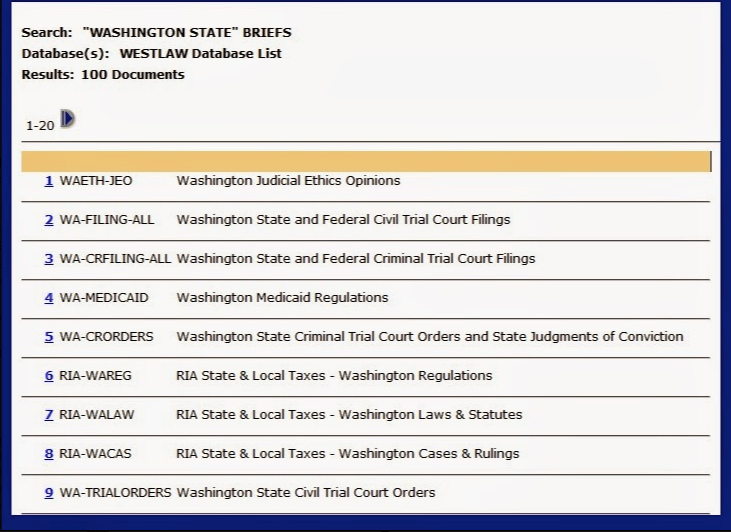
This makes looking up information by category, sub-category, and esoteric identifiers more effective than by keyword. In other words, search doesn’t really work, at least not in the way we’re used to on the web.
Needless to say, this is less than ideal for ease of use and efficiency.
Fortunately, for the first time since the advent of LexisNexis, the way legal research is conducted is now changing in a big way thanks to Artificial Intelligence.
The Future
Imagine you could get the answer to almost any legal question you have at lightning speed, simply by typing out a search query in plain English.
No endless scrolling through hundreds of categories or inputting identifiers that look like they could be part of a long-lost ancient language. Just one or two sentences and you receive a high-quality summary back.
This is what a new generation of AI-based legal tools are making possible for the first time ever.
Marveri
Marveri is an early-stage legal tech startup that we’ve backed.

They are working on an AI-driven platform that provides a unique suite of tools for corporate, banking, and finance lawyers to complete diligence more accurately and efficiently.
Among this suite are advanced data room tools, automated and auditable capitalization table tie-outs, to name but a few.
But this core offering is just the beginning.
Marveri’s ultimate aim is to revolutionize M&A transactions by helping streamline the entire legal process. From automatically organizing and intelligently renaming all documents inside a data room to identifying any unsigned and missing documents, the platform will make getting deals done on time a reality rather than fantasy.
The startup has assembled the right team for the task too.
Comprised of two PhD candidates, a JD and LLM holder, and a startup veteran with a previous exit under his belt, its founding team met while attending Harvard Business School and are building Marveri with access to the prestigious Harvard Law School legal database.
While still in stealth mode, Marveri is a good example of platforms that are emerging to serve more specialized areas of legal practice.
AI is Going Beyond Research Assistance
The legal profession and AI go together like a block and gavel.
Surveys have shown that legal professionals spend nearly 50% of their time on administrative tasks.
Many of these tasks are data intensive by nature and there’s nothing more proficient at sorting through a sea of data than AI.
Investors recognize this and are pouring money into AI legal platforms.
As an example, the AI legal startup Harvey, whose tool helps legal professionals draft, analyze, and answer legal questions, is targeting a $2 billion valuation for its upcoming Series C funding round.
Another reason capital is flowing into the space is because lawyers of all stripes, from solo and small firms to stalwarts such as DLA Piper and Reed Smith are adopting artificial intelligence.
According to one recent LexisNexis survey of 1,200 legal professionals, nearly two thirds of law firms have already made changes to their day-to-day operations as a result of generative AI.
This paves the way for a myriad of personalized AI applications to proliferate, from AI legal assistants to predictive analytics capable of forecasting case outcomes, and even platforms that are able to handle more complex tasks like providing entry-level legal services.
Some of these tools are already in use today, while others are just taking shape. The only certainty is that the future of the centuries-old legal profession will look nothing like its past or present.
If you found this post insightful, you may also like The Tokenization of Real World Assets or The Cloud and AI Combo – Groundbreaking or Trouble?
If you would like more information on our thesis surrounding AI in the legal profession or other transformative technologies, please email info@cadenza.vc
 Cadenza Chronicle
2 responses to “Raising the Bar: How AI is Transforming the Legal Practice”
[…] If you found this insightful, you may also like AI In HR: Transforming The Workplace or Raising the Bar: How AI is Transforming the Legal Practice […]
LikeLike
[…] you found this insightful, you will also like Raising the Bar: How AI is Transforming the Legal Practice and Charting New Territory: How DePIN is Changing The Physical World With Digital […]
LikeLike