

The next phase of artificial intelligence (AI) is here.
Unlike the first phase, it includes everything from advanced chips to mass automation, with all roads inevitably leading to robotics.
We take a look inside the emerging general robotics industry and one robot maker at the bleeding edge of it.
The Three Laws of Robotics
“Robots were created and destroyed their creator.”
It’s a plot line nearly as old as science fiction itself, but one that is getting closer to becoming reality every day.
It’s why the writer Isaac Asimov proposed three laws in his fictional “Handbook of Robotics“
- A robot may not injure a human being or, through inaction, allow a human being to come to harm.
- A robot must obey the orders given it by human beings except where such orders would conflict with the First Law.
- Robots must protect their own existence as long as such protection does not conflict with the First or Second Law.
This was a safe start for simple machines.
However, Asimov writing in the 1940s could never have imagined the sophistication of the robots that would eventually emerge.
The Legacy of Unimate
Create mechanical workers to replace humans in factories.
This was one of the ultimate goals of the first industrial robot.
Invented by George Devol in the 1950s and financed by Joseph Engelberger’s Condec Corp., Unimate made history when it was installed at a General Motors factory and worked on the diecasting assembly line starting in 1961.
But don’t let this fool you.
Despite Engelberger’s grand vision, which was helped by his admiration for Asimov’s science fiction stories. The Unimate was a programmable robotic arm that performed five repetitive tasks.
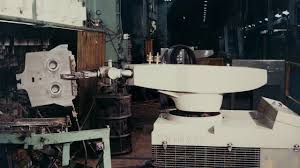
Regardless, it was revolutionary by the standards of the time.
A time when technology was still very much in its infancy.
For some context, the first personal computer wouldn’t be designed until some two decades later.
Still, the Unimate’s legacy lives on as the first step in factory automation. A multi-billion-dollar market.
Now, several emerging technologies are converging to take automation to the next level.
Advanced Mechanics
The first of these is advanced mechanics.
A combination of several disciplines, including mechanical engineering, electrical engineering, computer science, and software design. It is the difference between a machine being able to perform autonomous actions or needing to be manually operated.
Artificial Intelligence
If advanced mechanics are the heart of robotics, then AI and machine learning are the brain.
Creating machines that bear even a small semblance of human intelligence, remains one of the greatest challenges today.
However, large language models (LLMs) and vision language models (VLMs) are putting human-like robots in motion and facilitating their interactions.
As VentureBeat recently wrote, researchers are “creating robots that can process natural language commands and accomplish tasks that require complex reasoning” for the first time.
Despite such advances, the task of combining these technologies into a single cohesive system is not without its challenges.
For starters, engineers need to collect heaps of data for training purposes. This includes camera images, language instructions, and depth maps, which are costly and time-consuming.
The cost of high-quality data is estimated to be between $30,000-$100,000.
Now multiply that by several hundred or thousands of robots.
If this wasn’t debilitating enough, each robot is mechanically unique when it comes to its sensors and movements. This means each model needs to be painstakingly trained for unique activities and environments.
A task that can take months or years.
Such obstacles are why complete factory automation hasn’t been achieved despite the Unimate robotic arm rolling out more than half a century ago.
Until now…
The Last Human Element
Embodied AI is the integration of advanced mechanics, machine learning, computer vision, and other technologies.
This is what Cadenza-backed Dexmate’s dedicated team of AI and robotics experts are in the process of integrating to solve one of the last major challenges in industrial automation.

Founded in early 2024, Dexmate gets its name from the term “dexterous“, which means to be good with your hands.
It lives up to its name too, with Dexmate’s first prototypes coming close to replicating a real human hand, that is able to grasp, handle, and manipulate objects.
The implications of this are far-reaching.
Broadly speaking, industrial automation, be it package handling, retrieval, or helping human workers perform tasks, has already been achieved.
However, attempts to automate the picking and packing process, have so far fallen short.
This is because robotic, multi-jointed limbs have not been able to model one of the most essential functions of a human hand – the ability to grasp objects of any size or material.
Dexmate’s second prototype, capable of full dexterous manipulation, is currently being piloted in the warehouses of several major logistics operators with positive feedback.
It is also far cheaper to build and deploy than all-encompassing automated systems.
The next step for Dexmate is small-scale deployment at warehouses and research labs for training before rapid scale-up later in the year.
The robot maker’s timing couldn’t be better, with industrial automation growing rapidly, to the extent that more than a quarter of all warehouses in the U.S. could be automated by 2030.
In this regard, Dexmate is well-positioned to solve the last human element in industrial labor.
Beyond Novel Breakthroughs
From a limited, novel application to an absolute necessity.
This is what robotics have become when it comes to supply chains.
All together, automation is expected to account for more than a third of annual capital spending in the logistics space. The most of any sector.
The large e-commerce players, such as Amazon, Wal-Mart, and others have been early adopters of such technology since at least the 2010s.
Back then a simple mechanized solution cost well into the seven figures.
But, like any new technology, be it personal computers, cell phones, or software. This will change.
Specialized, solutions like dexterous robots are creating cheaper, smarter, and more adaptable solutions, which will increase productivity and make life easier for everyone.
From this standpoint, it is only a matter of time until there are robot(s) in every product-based business.
If you found this insightful, you may also like AI In HR: Transforming The Workplace or Raising the Bar: How AI is Transforming the Legal Practice
If you would like more information on our thesis surrounding robotics or other transformative technologies, please email info@cadenza.vc


One response to “Science Fiction to Reality: A Look At Dexmate’s Next-Gen Robots”
[…] you found this insightful, you will also like Science Fiction to Reality: A Look At Dexmate’s Next-Gen Robots or Game Changer: How TensorWave is Democratizing Access to Computational […]
LikeLike